Wednesday, 23 March 2016

Custom Nutrition has moved!

Spring has sprung both in our city as well as on my site!

After a long and humbling learning curve, I have put together a site that (hopefully) reflects the sense of peace and calm surrounding food that I help my clients achieve everyday. 
My intention is that this site be a place where people can get inspiration to eat good food, find self-confidence in choices they make and learn that healthy eating means different things to different people. 
Come on over and join the fun! 
www.LisaRutledge.ca


Tuesday, 1 March 2016

The ONLY secret ingredient you will need this year

healthy eating secret ingredient moderation
I have an amazing recipe I'd like to share with you that has been inspired by my recent social feeds. It contains a secret ingredient that helps squash food cravings and cut down on portions, both of which help with weight management!
But first, a little background on what I saw on my feeds that stirred up some emotions and motivation to share this secret ingredient.
First I scrolled past what looked like a dessert, but the description indicated it was a protein cake mixed with protein whip cream topped with protein pudding for someone's breakfast. Then I saw a gorgeous picture of artisanal donuts that contained no authentic doughnut ingredients (gluten free, sugar free, oil free...?). And then when I saw an ad for algae oil (what the what?) in a pancake recipe, I kind of lost it. Lost faith in humanity and lost my cool.
Is this what is considered food? Worse, is this what is considered healthy food?

From the same people who post that they love to eat real food that is good for the body and soul, I can't help but see the irony (and sponsorship) in these posts.
What happened to toast and peanut butter for breakfast and saving the (real) cake and pudding for dessert?
Why can't we just eat donuts the way they were originally invented? (Assuming we aren't talking about gluten and dairy allergies, of course.)
And what is wrong with versatile, healthy, cheap canola oil!?
Obviously, I've been too keen to add accounts to my social networks and it is time to clean them out. There certainly are mega benefits in clearing out the crazy diet cobwebs and you can read more about that here
But I find it important and fascinating (albeit frustrating) to see what new products are out there in the land of quasi-food.
But I digress. I have a recipe to share with you. The good news is that it contains easy to find ingredients that you likely already have in your house.
But wait, there is even BETTER news! It contains a bit of salt, fat and gluten. These boost the flavor of the resulting recipe and leave your mind and body feeling satisfied and full.
There is even a secret ingredient! It's not sexy or glamorous, but it works. The secret ingredient? Moderation. Eat a normal portion once in a while and it not only satisfies your desire for pasta with creamy sauce (which is a normal part of living) but it also has the super powers of staving off binges and feelings of deprivation from good food. What is this amazing recipe I speak of?
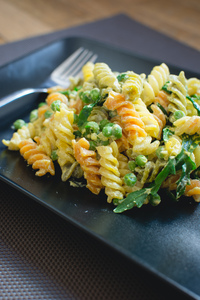
healthy eating secret ingredient moderation pastaQuick and Easy Alfredo Sauce
Makes six servings.
This Alfredo recipe is simple and so satisfying. You can whip it up in under 10 minutes.
1 container (227g) of cream cheese 
1 tbsp oil
1 cup of milk (you may need more to thin out the sauce)
1 cup shredded Parmesan cheese
pinch of salt and pepper
1/2 cup white wine
~6 cups of cooked pasta (any kind you like)
+
6 cups cooked broccoli
6 portions of 75g of cooked protein rich food (fish, chicken, pork, etc)
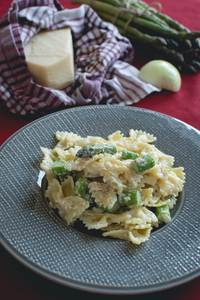
healthy eating secret ingredient moderation pasta1. Heat the fat in a pan over medium heat. 
2. Add the cream cheese, milk and wine. Stir to melt the cheese and create a creamy sauce. Add more milk, if too thick. 
3. Add the Parmesan cheese and salt and pepper. Stir to mix.
4. Either add the pasta to the pan or top the pasta (1 cup per person) with the sauce. 
5. Pair with a serving of meat and a serving (1 cup) of broccoli.
When the pasta is paired with a protein-rich food (say, grilled salmon) and some vegetables (we like broccoli), it is a balanced meal that is full of omega 3 and fibre.
Each serving contains two servings of vegetables, two servings of grain products, one serving of meat and alternatives, and one serving of milk and alternatives.
Take any of your favorite recipes, apply this equation to turn your recipe into a super power recipe like the one above:
(Favourite special recipe + cooked with love and care - guilt and shame) x moderation = happiness and healthiness

*where moderation = normal portion size eaten once in a while
healthy eating secret ingredient moderation

Saturday, 20 February 2016

Mindful Eating Series with The Grounded Therapist (#2)

mindful eating, healthy eating, mindfulness, hunger,
Mindful Eating can be helpful in so many different aspects of healthy eating: it can help naturally reduce portion sizes (if you tend to over eat due to emotions or mindlessness), it can help reduce emotions that can lead to eating when not hungry and improve confidence in food choices. It does, however, take some practice to truly work. That is why actively taking part in activities that increase mindfulness are integral and is how/why this series came about! 

Here is what Rachel, the Grounded Therapist, had to say about Mindful Eating in Part 2 of our series: 
I really wanted to title this post: Mindful Eating part 2 Electric Boogaloo but that would not have made this post easy to find. I’m not sure about you, but I was hiding from the polar vortex this weekend. Being “trapped” in my home here in CT is one of the worst times for me find myself eating when I am not hungry (aka not being mindful). In general, I am a high energy kind of gal, however (is anyone else an unending contradiction?) I love being at home. While it is not an ideal plan for eating for me (I know I should eat high volume, filling meals) I love to graze! LOVE IT! Little pieces of this, little parts from that and before I know it, a whole package of cheese and a box of crackers are gone. It gets worse when I become bored, want a distraction or just because I see something in my pantry (Red Flag Rachel, you are not being mindful!). It’s tough. When I am home and enjoying some much-needed downtime, it’s actually the worst time for my mindful eating practice. ARGH!
At the end of this post be sure to check out Lisa’s excellent tips and tricks to use mindfulness to catch yourself not being hungry and still eating. My two favorites are: identifying hunger vs cravings and the hunger scale. CHECK IT OUT!


mindful eating, healthy eating, mindfulness, hunger,

Without further ado, here is Part 2 of our Mindful Eating Series:

In the first installment, we focused on observing what is going on outside our body as well as inside before eating.
• Did you learn anything surprising?
• Are there specific people or environments that influence what or how much you eat?
• Are there any changes you made to your thoughts or environment that may positively impact your eating?
• Are there any patterns to your trouble spots during the day where you may be eating mindlessly or emotionally?
Taking even just a short moment to tune into your thoughts and emotions as well as what is happening around you can help you be more present (at the moment) and better able to hear your hunger and fullness cues. More on that in a moment.
But first, perhaps the MOST important philosophy of mindfulness is being aware of all these things without criticizing or judging yourself. For example, you are feeling stressed at your desk at work and want to eat your lunch but it’s only 10 am and you are not hungry. Rather than judging yourself and thinking: “what is wrong with me? I just had breakfast! How am I supposed to get through the day if all I want to do it eat!?”, try understanding the situation and how it is affecting you- “I am feeling stressed which usually pushes me to eat. Also, my stress is mounting with the constant chiming of emails. What I need to do is decrease my stress and food won’t do that…but a small walk to the bathroom might help me relax”.
Hearing and correctly interpreting hunger signals is integral to becoming your own expert on food. Judging yourself for feeling hungry or too full makes listening and interpreting harder to do. It can be helpful to aim to set the criticizing and judgment of food and weight aside for a few days to understand how freeing it is to live without them.
mindful eating, healthy eating, mindfulness, hunger,
There are many things you can practice to better hear and interpret hunger and fullness signals. The first place to start is with a simple question before engaging in eating: Am I hungry?
Before reaching for a snack or sitting down to a meal, find a quiet place (ideally away from food) to check in with your body’s hunger level. It may help to write out a list of physical sensations you have when actually hungry (vs experiencing a craving) and use it at this moment of checking in. The more you practice checking in with head hunger (ex. cravings or appetite) vs stomach hunger (actual need for energy), the easier and more intuitive it becomes.
It can be hard to hear subtle hunger cues and if you are anything like me, you may like a step by step guidance through this new eating territory. Practice listening for the cues before eating by following these steps:
1. Move away from the food or do this exercise before coming into contact with food such as before walking into the restaurant, kitchen or party. You can do this in your car, in the bathroom or in another room of your house.
2. Calm down by taking a few deep breaths.
3. Connect with your body and physical sensation. Place a hand on your abdomen and picture your stomach. How
full is it? How empty is it?
4. Ask yourself “Am I hungry?” “What physical hunger/fullness sensations am I feeling?”
5. Observe if there are any other physical signals or sensation? (ex. Edgy, weak, tired, thirsty?).
6. Notice your thoughts in this moment. Are you rationalizing eating? Feeling guilty or ashamed?
7. Beware of any negative thoughts you may have and let them go before eating.
That’s it- just practice noticing the difference between being hungry or wanting to eat for another reason. Wondering what to do if you are not hungry but want to eat? Stay tuned! There is more to come

BONUS! Understanding if you are hungry or not is a big step. If this activity comes easy to you, then try this bonus step #8: if you are truly hungry, start to evaluate how hungry you are using a mindfulness hunger scale. On a scales of 1-10, where 1 means starving or ravenous and 10 means so stuffed you feel sick, try to determine what level your hunger is at before eating. This can be used as a guide for portion size.


You can find Rachel :

Sunday, 14 February 2016

[Recipe] Easy Oven Doughnuts


Easy Oven Doughnuts


40 mins
Makes 12 large or 12 medium + 12 small doughnuts

You don't need to have mad skills with deep frying to enjoy these doughnuts. These are so easy to make, I whipped them up late one evening on a whim! If you have a muffin tin, an oven and some butter, you are all set to dig into these treats.

Ingredients:
  2 3/4 cups flour
  1/4 cup cornstarch,
  1 cup sugar,
  1 tbsp baking powder,
  1 tsp salt
  1/2 tsp nutmeg
  1 cup buttermilk
  8 tbsp melted butter
  2 eggs + 1 yolk
Cinnamon sugar topping:
  1 cup sugar
  2 tsp cinnamon
  4 tbsp butter

 Instructions:
1. Preheat oven to 400oF. 
2. Whisk together all the dry ingredients in a bowl then whisk together all the wet ingredients in a separate bowl. 
3. Add the wet ingredients to the dry and stir until the dough starts to come together. 
4. Spray muffin tins with cooking oil. 
5. Fill muffin tins about 3/4 full with batter. 
6. Cook for abut 20min. 
7. Melt remaining butter (4tbsp) in bowl. 
8. Mix together cinnamon and sugar. 
9. Once cooked and slightly cooled, brush the doughnuts with butter and coat with cinnamon sugar.


Monday, 8 February 2016

Why Heart Healthy Eating isn't as Bad as You Think


February is Heart Month! 
If you're thinking this has something to do with chocolates or roses, think again! This national campaign has been going strong for more than half a century. The goal is to raise awareness (and donations) for the Heart and Stroke Foundation and highlight the risks of heart disease and stroke. 
Coming from a nutrition background, we used to talk about avoiding eggs and cutting down on fat to help reduce risk for heart disease. Oh, how the times have changed. The most recent recommendations released are the Dietary Guideline for Americans by the USA Government. Interestingly, these guidelines did not mention cutting out dietary cholesterol- the cholesterol that is found in food. It has been long known that eating less cholesterol does very little to actually lower cholesterol levels in our blood. This de-emphasis on dietary cholesterol is great news since it allows us to focus on food related changes that will be more effective in actually lowering cholesterol levels in our blood. 


The US guidelines, along with the 2012 Update of the Canadian Cardiovascular Society Guidelines for the Diagnosis and Treatment of Dyslipidemia for the Prevention of Cardiovascular Disease in the Adult suggest many of the things you'd expect: Eat a variety of vegetables (dark leafy green, red, orange), whole fruits, grain products (half of all grains should be whole grains), low fat dairy (such as milk, yogurt, cheese and fortified soy beverage) and protein rich foods (like seafood, lean meats, poultry, eggs, legumes, nuts and seeds and soy products). As well as recommendations to avoid too much added sugars, saturated fats, and sodium.

I have to admit, I hate talking about what not to eat. Not only is it boring, but it perpetuates the myth that dietitians take away food choices. Believing that there are foods you have to avoid completely to be healthy is a myth and doesn't give us perspective on all the things that should be enjoyed for a healthy body and mind.

If you are trying to lower your cholesterol levels, here are some interesting nutrients you'll want to consider including more often. Please note that these nutrients are more effective when blood levels of bad cholesterol and triglycerides are high (rather than normal): 

1. Plant sterols or phytosterols
-consuming 1-2 g per day of phytosterols can lower LDL cholesterol (the "bad cholesterol) by 5-8%.
-example*: some foods naturally contain plant sterols but in quantities that are too low to make an impact on blood cholesterol levels, so we have to look to fortified products. Practically all products fortified with plant sterol contain about 1g per serving. Choose 2 servings from this list and you'll get ~2g: 2 tsp /10ml plant sterol fortified margarine (example), 100g / 100ml plant sterol fortified yogurt, 1 plant sterol fortified drinkable yogurt, 1 cup plant sterol fortified juice (example).


2. Soy protein
-consuming 25g of soy protein per day can lower LDL cholesterol by 3-5%.
-example: 1/4 cup/1oz soynuts (12g) + 2/3 cup /3oz) edamame (6g) + 1 cup/8oz plain soymilk (~7g). 


3. High viscous fibres - or what we used to call soluble fibre
-consuming 10g of psyllium (a type of solutble fibre) per day can lowered LDL choelsterol by 7% if you have high cholesterol.
-example: 1 tbsp/15ml metamucil (3.5g) + 1/4 cup/1oz roasted soy nuts (3.5g) + 1 med orange (~2g) + 1 cup/250ml cooked broccoli (~3g).


4. Omega 3s
-consuming 2-4 g per day of EPA and DHA, under a physician’s care, can lower triglycerides levels by 25-30% if they are very high. 
-example: 75g / 2.5oz salmon (~1.5g) + 2 egg serving of omega plus liquid eggs (0.5g) + 75g/2.5oz canned sardines (1g).


5. Nuts 
-consuming 30-67g per day can reduce LDL cholesterol by up to 7% and triglycerides by 10%.
-example, 1/4 cup/60ml usually equals about 35g of nuts, regardless of the type of nut. 


*unfortunately, it was extremely difficult to find information on example products via the internet. The best bet is to read the package of the food that is fortified with plant sterols/phytosterols. Any food claiming to contain plant sterols must include the amount found in one serving. 

KEEP IN MIND: eating a diet that includes these cholesterol lowering nutrients may help you lower your cholesterol levels better than JUST eating a diet low in saturated fat (13.8% versus 3%). 

This handy graphic outlines all you need to know about the powerful nutrients you should include in your diet to help lower high cholesterol:


Wednesday, 27 January 2016

Mindful Eating Series with The Grounded Therapist (#1)

This time of year you can't glance at any social media feed without being bombarded with (bad) advice on how to lose weight/be healthy/shape up. There IS an alternative to all that diet & clean eating crazy speak: Mindful Eating. I understand that it can be a hard to understand concept- so I have embarked on a project to help you understand what it is and how it can help you and (perhaps more importantly) how you can start practicing it today. This is a collaboration between myself and The Grounded Therapist. 

I met Rachel Dougherty, The Grounded Therapist, through a bloggers group. Since I write & talk a lot about the psychology behind eating, I am always eager to collaborate (and learn from) psychologists who are experts in mindfulness. After some exciting exchanges, we decided to collaborate on a Mindful Eating series! 

Here is what Rachel had to say about Mindful Eating: 
"This is the time of year when people try to make healthy goals for themselves. Diets and weight loss tricks are everywhere. It’s unavoidable. However, there are few real sustainable plans out there. Since we know most diets fail, what can you do if you want to lose weight, be more healthy or set a new fitness/wellness goal? What about starting to eat more mindfully? I know mindful eating is something I consider each new year after eating way too many cookies and cake. My birthday is on thanksgiving. It’s just cake and sweets from November to January 2nd. When you eat well and get some exercise you body and mind feel great. You will have more energy which means you will do good work, be able to accomplish more goals which make you want to continue to eat better. It’s an amazing cycle which I still manage to derail at times. I ... consider mindful eating a self care priority. "

Without further ado, here is our first post:

You’ve probably heard that mindful eating can help you manage your weight, reduce any disordered eating and help repair your relationship with food. Understanding what mindful eating is and how to practice it is the challenging part. This is mainly because it requires inner reflection, paying attention and lots of practice.

Being a mindful eater means much more than just eating when you are hungry and stopping when you are full. Most people have heard the advice to “stop when you are full” and roll their eyes because, let’s be honest, you’ve probably tried it, and without the proper support, it may not have worked for you. For a greater chance of actually stopping when you are full, there are many things to practice and that is what this series is all about! In fact, the goal for many people is to use mindful eating as a way to reduce emotional and mindless eating. This means practicing being able to recognize when you are full, estimating how much food you need, letting go of judgement about your body & food and learning to trust your instincts.

Going beyond the “eat when hungry and stop when full”, mindful eating includes noticing the colors, smells, flavors, and textures of your food; eating more slowly; getting rid of distractions like TV or reading; hearing hunger and fullness cues and learning to eliminate guilt and anxiety about food. Noticing these things means deliberately paying attention and being fully aware of what is happening both inside and outside yourself.

Inside yourself includes what is going through your mind such as any emotions or thoughts you may be having- "I am stressed" or "I feel fat". Mindfulness includes paying attention to the experience in our body. Where in the body do we feel hunger? (in the head or in the stomach?) What does half-full feel like, or three quarters full?

Outside yourself means your surroundings:
  • Where are you physically?
    • sitting or standing? 
    • at your desk with emails coming in every 2 minutes? 
    • or alone in the kitchen with everyone gone to bed?
  • Who are you with? 
    • Compassionate people who make you feel confident?
    • Or people who judge your eating and weight. 
The idea is to eventually learn in what way these thoughts, emotions and environment affects what, how and how much we eat. But, before we get ahead of ourselves, lets stick to practicing observing.

Eating mindfully can sound a bit abstract and practicing concrete activities to increase mindfulness can help you get started. To start becoming more mindful of when, how and what you eat as well as what influences you to eat, there are hands on exercises you can practice. Let’s start with this exercise:

Before eating, take a minute to observe your environment (outside your body) and your thoughts, emotions and how you physically feel (inside your body):
  • are you stressed? Anxious? Happy? Sad? Tired?
  • at the table and discussing stressful news? Standing up at the counter? Sitting in front of the tv?
  • are you at your desk? In a stressful meeting? Rushing around in the car and feel you have no time to eat?

The goal is only to observe. Take notice. Pay attention more to your surrounding and your body and mind. This is invaluable for later, when trying to find patterns or barriers to eating mindfully. 

Click to tweet this! 


You can find Rachel :


Sunday, 24 January 2016

[Recipe] Luscious Rice and lentil pilaf

Luscious Rice and lentil pilaf

With hints of cinnamon, cumin and coriander, this pilaf warms hearts and bones. The ingredients are not only inexpensive but are easy to find and likely already in your pantry. Paired with a side salad, this meal is completely balanced. You could even use the yogurt dressing on the salad! 

Total time: 50 mins

Serves 6

Ingredients

YOGURT DRESSING:

1 cup plain yogurt
2 tbsp lemon juice
1/2 tsp minced garlic
1/2 tsp salt

RICE AND LENTILS:

1 1/4 cups green or brown lentils, rinsed
Salt and pepper
3 tbsp canola oil
1 1/4 cups Basmati rice
3 garlic cloves, minced
1 tsp ground coriander
1 tsp ground cumin
1/2 tsp ground cinnamon
1/2 tsp ground allspice
1/8 tsp cayenne pepper
1 tsp sugar
3 tbsp minced fresh cilantro

Directions 

1. To make the dressing: Whisk all ingredients together in bowl and refrigerate.

2. Place lentils, 4 cups of water and 1 tsp salt medium saucepan over high heat and bring to a boil. Reduce the heat to low and cook until lentils are tender (~15 min). Drain and set aside. While lentils cook, place rice in medium bowl and cover by 2 inches with hot tap water; let stand for 15 minutes.
3. Gently stir rice grains to release excess starch then pour off water, leaving rice in bowl. Add cold tap water to the rice and then pour off the water. Repeat adding and pouring off cold tap water 4 to 5 times, until water runs almost clear. Drain rice.


4. Heat the oil, garlic, coriander, cumin, cinnamon, allspice, 1/4 teaspoon pepper, and cayenne in a Dutch oven over medium heat for 2 minutes. Add rice and cook, stirring occasionally, until edges of rice begin to turn translucent (~3 min). Add 2 1/4 cups water, sugar, and 1 tsp of salt and bring to boil. Stir in lentils, reduce heat to low, cover, and cook until all liquid is absorbed (~12 min).


5. Take the pot off the heat & remove lid. Place a dish towel over the pot and replace lid. Let stand for 10 minutes. Fluff rice and lentils with fork and stir in cilantro.


6. Serve with a drizzle of yogurt dressing and 2 cups of salad on the side.

Tuesday, 19 January 2016

Your Guide to Eating (and enjoying!) Beans and Pulses


Co-written with Jenna West, dietetic intern
You may have heard that the UN Generally assembly has declared 2016 as the International Year of Pulses. The point of this campaign is to shine alight on the nutritional and environmental benefits of eating more pulses.

If you are not sure what exactly a pulse is, let alone why you should eat more of them, we've got you covered! Here is our quick and easy guide to understanding pulses and (perhaps more importantly) how to eat more of them with fewer digestive symptoms.

(BONUS: stick around for easy, delish recipes you can try tonight!)
Believe or not the word "pulse" has a meaning other than the beating of your heart. In nutrition, the word "pulse" is derived from the latin word "puls" which means thick soup or potage, and refers to the dry seed of the legume family. You probably know them better as beans, peas, lentils and chickpeas.
There are four types of pulses:
-dried beans (pinto, kidney, navy)
-dried peas (yellow, green)
-chickpeas (garbanzo)
-lentils (red, green)
Pulses differ from soybeans and peanuts because they contain virtually no fat. They have enormous health benefits thanks to their fiber and protein content, and the good news is... they are cheap! You may already know that legumes in general are an important part of a well-balanced diet, but knowing how to incorporate them in your diet can be difficult.
Before getting into the how, let's first review the health benefits
  • They contain a high amount of nutrients for a low amount of calories
Pulses are naturally high in vitamins and minerals such as iron, zinc, phosphorus, folate and other b-vitamins. They are also high in protein and low in calories and fat. Combined with grains, nuts, seeds, or dairy, they make an excellent source of complete protein for vegetarians and vegans.
  • They are high in fiber
One of the benefits of eating pulses is that they contain a high amount of soluble and insoluble fiber. The former helps decrease cholesterol while the latter helps maintain a healthy gut. Insoluble fiber moves through your body undigested, and finally gets fermented in the gut by good bacteria. A healthy gut is important for the prevention and management of many chronic diseases as well as colon cancer. Fiber also helps keep you full for longer, which can help with weight management. There is also some evidence that feeding our gut bacteria with fiber helps with weight regulation. The science is still young, but so far it has looked promising. A recent episode of The Nature of Things explores the connection between the body's microbiome and weight. Check out the episode here.
  • They help regulate blood sugar levels
The starches found in pulses are harder to break down in our bodies, and therefore digest at a much slower rate. Pulses are therefore considered low glycemic index because they prevent our blood sugar from rising quickly. This can be beneficial for the prevention and management of diabetes, obesity, cardiovascular disease and cancer.
  • They are incredibly versatile
One of the great things about pulses is that they come in various forms: whole, split or ground into flours. These flours can be an alternative to all-purpose flour, and can be used to make baked goods such as breads, muffins and cakes.


  • They are environmentally friendly
Pulses are not only beneficial for our health, but they also benefit the planet! Legume plants contain bacteria that produce nitrogen compounds that help the plant to grow and compete with other plants. When the plant dies, the nitrogen compounds help fertilize the soil and create an environment where new plants can grow.
Here are some tips on how to prepare dried pulses
  • Wash dried pulses thoroughly and soak overnight. Changing the water often helps improve their digestibility
  • Dried lentils or split peas do not need to be soaked overnight because they are smaller
  • Boil dried pulses in fresh water
  • Remove the foam that comes to the surface while boiling
  • Cook until the pulse becomes tender (it may take 1-2 hours). Cooking time will depend on the type of pulse so it's a good idea to check the package
Of course, to save time you can buy canned pulses which have been pre-cooked so you can skip any soaking and boiling.
How to incorporate pulses into your diet:
One of the reasons why people do not eat pulses more often is due to the undesirable temporary side effects they can cause to our gut. Here are some tips to lessen the digestive side effects:
  • Smaller pulses are easier to digest and tend to cause fewer side effects. If pulses are a new addition to your diet, start with lentils or split peas.
  • Rinsing canned pulses well and eating only a ⅓ of a cup at a time can also cut down on any embarrassing side effects. But don't worry! The more you eat beans, the fewer side effects you will feel. Our gut bacteria become used to the high amounts of fiber and your body adjusts.
  • If you are prone to feeling bloated or gassy, avoid eating anything sweet like fruit or other desserts at a meal where you are eating pulses. This tend to make gas production worse.
  • Of course, if you really feel uncomfortable eating pulses, consider using Beano to help relieve your digestive symptoms.
To encourage the whole family to enjoy them:
  • Try mixing them with the meat in your favourite recipes. Rather than change a recipe completely, try using half the amount of meat and replace the other half with pulses. This works particularly well in a Shepherd's pie, Sloppy Joes, chili, meatloaf or hamburgers.
  • Mix them into your grain product. Rice and beans is a traditional favourite in many cultures around the world. Quinoa and bean salads are also very popular these days
  • Try interesting flavors from around the world to awake your senses. Indian flavors like coconut, cumin and coriander go very well with the flavors of pulses. So does the spicy flavors of Spanish foods and those from Mexico.
Cooking tips
  • Don't salt the water when soaking beans. Doing so will result in harder, and possibly inedible, beans. Instead, add salt after reconstituting the dry beans and midway through the cooking process.
  • Use canned pulses to save time.
Recipe ideas
If you are looking for some inspiration, try these quick and easy recipes to get started:

Check out my FREE Resources page for more easy recipes made with pulses in my mini recipe e-books!


Thursday, 14 January 2016

Healthy body on a Healthy Budget


Although the holidays are well behind us, the pinch of all that holiday spending is still being felt. On top of that, resolutions made to eat better can seem impossible when budgets are tight. The good news is that there are ways to eat well this winter while trying to cut back on food spending.
Before you give up on trying to eat healthy or worse, run into debt buying pomegranate juice and goji berries, hear me out.
Not surprisingly, there is middle ground between eating Kraft dinner and hot dogs every night and breaking the budget with boxed salad and wild, organic salmon. Sure, it may require a bit more planning and preparation than if you had an unlimited budget, but with time and practice any extra effort it takes now will soon be a thing of the past.
In fact, money aside, many of these tips can help you eat a wider variety of food on top of eating more antioxidants, fiber and other healthy nutrients.
1. Stock up on canned and frozen vegetables and fruit.
Packaging and freezing techniques have come a long way over the last decade so frozen produce is equally nutritious and sometimes riper when compared to their fresh counterparts. Plus, they are often more convenient to prepare since they are sold washed, peeled and cut up. This also save a heap of time in cooking thus increasing your chances of actually eating a vegetable at supper or fruit at breakfast. Since they spoil a heck of a lot slower than fresh fruits and veg, you can stock the pantry and freezer with all different kinds, allowing for more variety. Forget eating broccoli all week to avoid it from spoiling! You could have a different vegetable every night if you'd like.
2. Prepare more meals with plant based protein such as lentils, chickpeas and tofu.
Beans and pulses can be seasoned to match almost any flavour combination. When used as a substitute for meat in your favorite dishes, beans can save you up to 70% of the cost.
For example, if a boneless chicken thigh costs ~$1.00 and a serving = 1.5 thighs cooked. And 3/4 cup of cooked lentils is a serving of meat and alternatives, and costs about $0.45 (or 1/3 of a can of lentils that costs ~$1.30), then it appears that you could reduce your protein costs by about 70 per cent by substituting beans for chicken.
If meat is a must in your house, try diluting your choice of meat with beans (or tofu or edamame). This preserves the meaty flavour while cutting down on the cost of the meal. This idea works really well in dishes like Sheppard's pie, Ratatouille and chili.
Of course there are other protein rich foods such as eggs (2 eggs = $0.60), cottage cheese (3/4cup = ~$1.30), canned tuna (1/2 a can = $0.80), and even peanut butter (2 tbsp = $0.17).

3. Pack up leftovers individually into freezable containers and make your own microwave dinners.
Rather than buying TV dinners, make your own. Apart from the obvious save in the sodium and bad fat department, they'll allow you to enjoy a decadent meal for way less. This is also perfect for people who don't like eating the same thing for lunch as they had last night for dinner. Simply freeze the meal and save for a day next week. Added benefits include helping you crawl out of a sandwich or salad rut and enjoy a homemade hot meal in the middle of the day.
4. Buy what is on sale and in season.
Since sales change from week to week, you can almost be guaranteed to eat a wide variety of foods of you follow this tip. Remember: variety doesn't have to be day to day or meal to meal. One week of eating more green beans and the next eating more cauliflower is a cheaper way to eat healthy.
This can be a huge help in saving you money on the more expensive foods such as yogurt, breakfast cereal and fresh fruit and vegetables. It may also open your eyes to new products or brands you hadn't thought to eat before.
Buying produce that is in season means that it will likely be more flavourful and higher quality for a lower price. Check out this chart by SOS Cuisine for what is in season in your area.
Also, one last tip! Throwing out spoiled or uneaten food is a HUGE waste of money. Either changing your buying habits to better suit what you eat or using a basket labelled "eat soon" in your fridge to highlight foods to be eaten asap can help. There is nothing more frustrating than setting a goal to eat better, buying a ton of fresh food, then having it spoil before all of it can be eaten. Pace yourself! Buy what you need and plan out meals in which to use the fresh food. Practice makes perfect when trying to throw meals together with what is in the fridge!

Looking for recipes that won't break the bank? Download my recipe e-book for delicious and balanced meals that are quick to make any weeknight. Simply click here and follow the instructions.


Popular Posts