Showing posts with label diets. Show all posts

Thursday, 11 December 2014

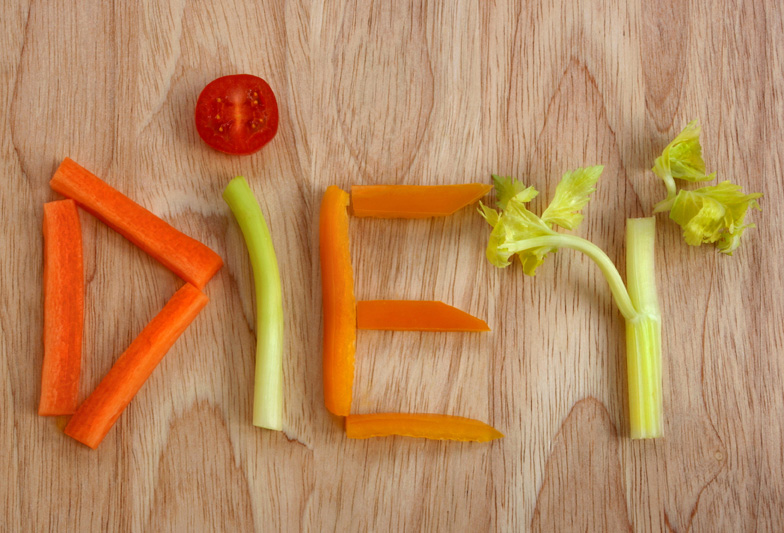
5 reasons NOT to start a diet this new year


1. Failure is the probable result: most diets fail to help you lose weight or keep it off for any length of time. It is very likely that you'll regain the weight back - if you have managed to actually lose any.  They fail for many reasons- mostly because you are human and diets are made for robots. What I mean is that humans (YOU!) were meant to eat good food, enjoy foods you love once in a while, eat with flexibility and eat with pleasure and occasionally for pleasure. Most diets take all of that away. They quiet your greatest internal food expert (hunger and fullness) and make you focus on an outside "expert" (a meal plan, forbidden foods, pills, etc).


2. You'll always get what you've always gotten and then some:  If you have tried many diets in the past, and they have failed (presumably this is the reason why you want to start another one...), then chances are it won't work. NOT because you've failed or did something wrong, but because dieting is a failed concept. Unfortunately, lack of losing weight may not be your only negative. Most people take their lack of success personally and fell like they themselves are failures rather than blaming the outrageous promises of the diet. Ads for diets are meant to hook you in; promise crazy results with even crazier suggestions of how to cut out food and fun. They are meant to dazzle and prey on people's desperation to lose weight. Shame on them- NOT on you. Perhaps if we didn't regard "being skinny" as the ultimate greatness, they would have less power.


3. There is a good change you may actually gain weight: not losing weight is a bummer. Gaining weight is an even bigger let down. This can be due to a few factors-  they can lower your "metabolism" (slow down the amount of calories you burn), increase your appetite and preoccupation with food as well as disconnecting your from your hunger and fullness cues.


4. They are a waste of good money: there are SO MANY other ways, that are far less costly and more effective to help you make changes to your life and diet. The secret all those diet books, pills and plans aren't telling you- you can do it on your own with a few helpful books or websites. AND you don't have to swallow any nasty shakes or bars. Consulting with a registered dietitian who are the experts on weight management will likely give you weight management tools that will help you for the rest of your life (vs diets that only help for the next few weeks). Just make sure you find one who specializes in weight management and takes the mindful eating/ intuitive eating approach.


5. They do not get to the bottom of why you have a certain lifestyle: they do not address the reasons why you emotionally eat, overeat, eat when you are not hungry and other hugely important aspects. They may claim they do this but many are too focused on meal plans, counting carbs/points or special products to actually help you explore these habits. Doing mental exercises that help you understand why you eat, why certain foods are chosen over others, and what emotions push you to eat are rarely included. In fact, some diets may actually fuel your emotional and binge eating.


Saturday, 9 March 2013

"Diet talk" DARE

What if for just one day, we vowed to stop the "diet talk". We stopped talking about how much we want or need to lose weight. Stopped mentioning how fat we felt or how guilty we feel about eating this or that. What if we avoided reading magazines that promote unhealthy body images and diet foods? I think that if we stopped the diet talk and self negotiating "I can eat this now if I exercise or restrict later" that we would discover a whole new world. A world where it would be easier to make healthy food choices since they were not forced upon us. Where fun foods would be less tempting since they were always available and no longer illegal. I think that any fears  about going over board on calorie dense foods would slowly melt away since we would now have a wider selection of food to choose from.
I think we would start to appreciate our bodies and the uniqueness of them if we only stop picking their flaws apart. Nothing positive can come from a constant bombardment of negative body talk. And this negative talk we all think will help us eat better and move more....well it turns out beating ourselves up doesn't actually help us to change for the better. Studies have actually proven that those who have a better body image regardless of their size live a healthier lifestyle (by choice, not by fear of getting fat).
Just imagine the influence we could make on others around us if we stopped enabling them to dis their body or eating habits. How many times have you been sucked into a conversation trying to one up each other in the bad food you ate or how your legs are so much more big then their belly!? Bonding with one another by bashing ones body is not a bonding moment I ever want to have again.
So, my dare to you is to join me and just for one day, be kind to your self and your body, refuse to body check in the mirror, enjoy eating the food you love and try to think only is it I've thoughts about you self. You may be surprised how addictive it can become!

Wednesday, 30 January 2013

Weight loss and the Macguffin

What does the Atkins diet and Skyfall have in common? or to be more broad, what does any action or spy movie have in common with diets? A Macguffin.
These movies have very similar structures: you have a good guy, a bad guy and the reason why they have come face to face. This reason, the thing that differentiates one movie from the next, is called the Macguffin. How can we sit through countless bond films and still be entertained, is the slight difference between each movie. 
The same can be said for diets. They usually promote certain foods (the "good foods") while vilifying others (you guessed it, the "bad foods"). The Macguffin is the "catch" on how this diet is different from the others. All of these fad diets are low calorie- it's the way that they get you to restrict your calories that is different (or the "macguffin"). They may not state outright that the diet is low calorie, they are more likely promote some "miracle" food or supplement that is the "trick" to weight loss.
The reason why diets are not a healthy or smart way to lose weight, is the fact that they are not sustainable. They are designed to work only in the short run and can only really be followed for a few weeks or months. 
Also, they can recommend eliminating healthy foods, such as milk and alternatives, fruit and whole grains. I suppose you could say they all have the same unhappy ending: weighing more than what you weighed when you started dieting. 

Here are some popular diets and their Macguffins:

Atkins diet: good guys = protein and fat; bad guys = carbs (fruit, grain products, other starchy foods).  
Paleo diet: good guys = protein and fat; bad guys = carbs (grains, dairy, other starchy foods).
South beach diet: good guys =low glycemic index foods, good fats; bad guys = high glycemic index foods and bad fats like saturated and trans fats. Certainly less restrictive than other diets but low calorie never the less. 
Montignac: good guys =low glycemic index foods; bad guys = high glycemic index foods. Oh and lots of complicated food combing to limit what you can eat.
Eat right for your blood type: good guys = "depends on your blood type"; bad guys = "depends on your blood type". Basically, each blood type will be limiting certain foods to get calorie intake down.  

Many of these diets have common bad guys and good guys, only proving that creative labeling foods as good and evil is not the best strategy to manage your weight. 
It's funny how, despite having all of these diets, that there still is an "obesity epidemic" in most countries. Perhaps it is because they do not work? or because they are not "the answer"? 

Quebec has an interesting site to visit regarding diets and weight loss plans. Here is an interesting pamphlet if you are considering taking on a diet. 
Equilibre is another great site for more info. 
If you are a health professional, joining the Canadian Obesity Network is free and their website is great!

Thursday, 3 January 2013

Binge eating disorder demystified

We've all heard of "binging" or an eating disorder called "binge eating disorder", but so many people don't understand exactly what it is or how to identify it. This is especially true of the very people who suffer from it. Too often the sufferer will blame themselves and and their "lack of self control".
Take Joan, for example. She was a client of mine who had followed many diets in her lifetime and as a consequence, her weight had fluctuated by about 15 pounds up and down for the last few years. She did not understand why she just could not just keep off the weight after following low carb diets, and why she could not stop eating food even when she was full. She believed she was "addicted to food" and always wanted to lose just 5 more pounds to feel better about her body. She was convinced that she needed to have more firm rules about what to eat and that if she didn't have rules, she would go crazy eating "bad foods". Unfortunately, this way of thinking is very common despite the fact that strict food rules lead to binge eating. "Lack of self control" is in quotation marks because binging has nothing to do with self control, and has everything to do with strict diets, food rules and vilifying certain foods.

Understand the complexities of this disorder and identifying what you are struggling with is key to finding the right help. Here are the criteria for identifying binge eating episodes (binge eating disorder is when a person suffers from recurrent episodes of binge eating) : 

1. Eating, in a discrete period of time (e.g., within any 2-hour period), an amount of food that is definitely larger than most people would eat in a similar period of time under similar circumstances and 
2. A sense of lack of control over eating during the episode (for example, a feeling that you cannot stop eating or control what or how much you are eating). 

Binge-eating episodes are also associated with 3 (or more) of the following:

1. Eating much more rapidly than normal.

2. Eating until feeling uncomfortably full.

3. Eating large amounts of food when not feeling physically hungry.

4. Eating alone because of feeling embarrassed by how much one is eating. 

5. Feeling disgusted with oneself, depressed, or very guilty after overeating.

6. Marked distress regarding binge eating is present (meaning, you or your friend is unhappy and stressed about binge eating).

7. The binge eating occurs, on average, at least 2 days a week for 6 months.

If you or someone you know is suffering from binge eating disorder, you are NOT alone. There ARE things you can do to help overcome binge eating (and beating yourself up for not having enough "self control" is certainly NOT part of the treatment). Firstly, it is invaluable to seek help from a knowledgeable dietitian or psychologist who specializes in eating disorders. Understanding why you binge eat and what is influencing you to do so is key to stopping the binge eating cycle. If you live in the Montreal area, contact me to discuss finding an expert who can help you today. 

Popular Posts